Earlier this year, we faced an unusual problem across several of our commercial battery storage sites: The batteries were operating, but the third-party company responsible for monitoring and dispatching them had exited the business.
The departure was immediate, which left the sites without active dispatch or monitoring. That created a real issue for customers. The systems were installed to help manage demand charges, so without active operation, customers could be exposed to the same cost volatility the batteries were meant to reduce.
It also raised a broader question that asset owners like us are likely to face more often as the storage market matures: What happens when a vendor leaves the market while the equipment it supports still has years of useful life ahead of it?
The challenge was restoring the controls and monitoring needed to operate them without rebuilding each site from scratch. One option was to replace the existing control architecture entirely, but that would have added costs and disruptions. It could have required removing functional equipment, installing new hardware, rebuilding communications and recommissioning each system.
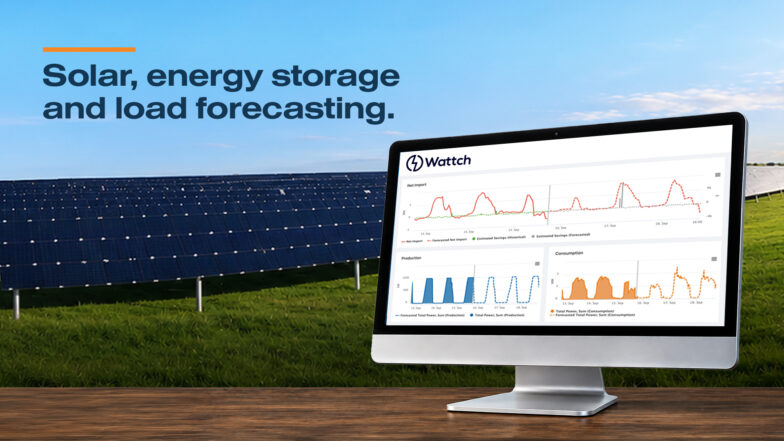
Instead, we contracted with Wattch, which was already working with the company to retrofit some of its solar portfolio for monitoring, to see whether the existing battery systems could be moved onto a new platform.
The first step was understanding exactly what was already in place. Wattch reviewed the site documentation, installed equipment and communications architecture to determine what could be retained and what needed to change.
That review showed the systems could move to the Wattch platform without a wholesale rebuild. In fact, the new configuration required fewer devices in the communications path than the original setup, resulting in a simpler networking architecture and fewer potential points of failure.
From there, our Supervisory Control and Data Acquisition (SCADA) and asset management teams handled the physical hardware changes at each site, while Wattch remotely commissioned the systems as they came back online.
What could have become a much larger replacement project instead became a targeted transition that preserved functioning equipment and restored active battery management.
There is a broader operational takeaway here.
Storage owners naturally spend a lot of time evaluating equipment performance, degradation, warranties and maintenance. But long-term ownership also means thinking about the companies and technology platforms surrounding the equipment.
A battery may operate for 15 or 20 years. Over that same period, software providers can be acquired, integrators can change strategies, and service companies can leave the market altogether. Those changes don’t necessarily make the underlying asset obsolete, but they can create real operational problems if the system was built around a platform that is difficult to replace.
For long-term owners like Standard Solar, that makes flexibility increasingly important. And asset managers like me need to understand how their systems are put together, where vendor dependencies exist and whether another provider could reasonably step in if circumstances change.
Internal technical knowledge matters as well. Our SCADA and asset management teams were able to work directly with Wattch because they understood the existing systems and could make the required changes in the field. That avoided treating the installations as closed systems that had to be replaced simply because the original service provider was no longer there.
As more commercial storage assets move into long-term operation, vendor continuity deserves a place alongside equipment performance and maintenance in the broader discussion of operational risks.
The experience at these sites was a good reminder that keeping storage assets productive over their full operating life requires enough flexibility in the surrounding systems to adapt when the market around them changes.
More Recent Blog Posts
Building The Energy Economy: What Rising Power Demand Means for Project Development and Investment
November 2, 2026
Seth Adams, Senior Vice President of Construction · 6 min read
Power Under Pressure: Five Forces Reshaping America’s Energy Future
October 21, 2026
Rick Berube · 7 min read
Copicut Community Solar + Storage
September 8, 2026
Standard Solar · < 1 min read
Turning Contracted Revenue Into Long-Term Value
August 17, 2026
Jay Smith · 4 min read
Share