

For years, the solar industry’s go-to metric was simple: megawatts installed. It was a clean headline number, easy to track and great for showing momentum. But the market has moved on.
In 2026, solar is increasingly judged as infrastructure. That means it’s not just about how many megawatts get built. It’s about how reliably projects show up, when they show up and how consistently they perform once they’re online. The scorecard is expanding from capacity to confidence. Welcome to the era of performance plus delivery certainty.
From “MWs Installed” To “MWs That Show Up On Time”
The old scorecard was a snapshot. The new one is a schedule. Developers, investors, offtakers and utilities are under more pressure than ever to meet milestones, meet service dates and navigate the realities of interconnection and commissioning. The difference between “late-stage” and “in service” is no longer a footnote. It’s where value is created or lost.
That shift is showing up in boardrooms and investment memos as a new set of infrastructure-grade metrics:
- Time-to-service: How quickly a project moves from late-stage development to commercial operation.
- Schedule confidence: The probability that a project will hit key milestones without slipping.
- Procurement certainty: The ability to lock in critical equipment, pricing and lead times early enough to protect the schedule.
These aren’t abstract ideas. They’re how portfolios get financed, how pipelines get valued and how teams decide which partners can execute at scale.
Time-To-Service Is Becoming The Headline Metric
Time-to-service is the ultimate translation of strategy into reality. It answers a basic question: How fast can a project become a functioning asset? It also forces a more honest accounting of what slows projects down. Permitting and interconnection still matter, but schedules often slip for reasons that are less visible, such as equipment availability, logistics timing, product substitutions and late-stage scope changes triggered by supply uncertainty.
In a world where solar is expected to behave like dependable infrastructure, time-to-service becomes a measure of operational maturity, not just development progress.
Schedule Confidence Is What The Market Is Really Buying
Schedule confidence is the metric underneath the metric. It’s the difference between a pipeline that looks strong on paper and a portfolio that reliably turns into operating projects. It’s also why execution has become the differentiator that sophisticated buyers talk about most.
High schedule confidence doesn’t come from optimism. It comes from controlling variables: standardizing designs that reduce surprises, aligning development assumptions with construction realities, tightening handoffs between engineering, procurement and construction, and reducing late-stage dependency on volatile supply chains. In other words, schedule confidence is a leadership discipline. It’s a sign the organization can deliver repeatably, not just occasionally.
Procurement Certainty Is Now An Infrastructure Requirement
If you want schedule confidence, you have to get serious about procurement certainty. Why? Because supply chain variability is one of the few risks that can derail a project quickly, expensively and late in the process.
A missing component or extended lead time doesn’t just add weeks. It can trigger cascading resets: revised construction sequencing, workforce remobilization, re-permitting for substitutions, financing adjustments, offtaker conversations, and, in the worst cases, missed policy windows. Procurement certainty is no longer a back-office function. It’s a core infrastructure discipline.
Why Safe-Harbor Inventory Matters Now
This is where safe-harbor inventory becomes more than a tax strategy. It becomes a delivery strategy. Safe harbor is often discussed as a compliance mechanism tied to the Investment Tax Credit. That’s real and important. But in today’s market, safe-harbored inventory also does something equally valuable: It takes control of a major schedule variable.
When critical modules are secured and ready to deploy, project teams can plan with confidence. Construction sequencing becomes more predictable. Procurement risk shrinks dramatically. Substitution pressures decline. Project schedules become more financeable and repeatable.
In short, safe-harbor inventory turns uncertainty into an execution advantage. It also changes the conversation with developers and partners. Instead of “Can we get equipment in time?” the question becomes “How quickly can we move from late-stage development to construction and operation?” That is a fundamentally different posture, and it’s exactly what the new scorecard rewards.
Safe Harbor As A Bridge Between Policy Windows And Project Reality
Policy timelines don’t always align with project reality. Development cycles are messy. Interconnection queues shift. Permits take longer than planned. Construction windows move because of weather, labor availability or site constraints.
Safe-harbor inventory helps bridge that gap by protecting eligibility while keeping the path to construction intact. It creates breathing room without creating complacency, and it gives teams flexibility to maintain momentum when external timelines change. That matters because the market is not just pricing the tax credit. It’s pricing the probability that the project gets placed in service within the window that matters.
The New Scorecard Is About Trust At Scale
The most important shift isn’t the metrics themselves. It’s what they represent. Performance plus delivery certainty is ultimately about trust: trust that projects will reach commercial operation on schedule, trust that portfolios can scale without breaking and trust that infrastructure will perform predictably once it’s online. The organizations that win in this era won’t be the ones who simply announce more megawatts. They’ll be the ones who consistently deliver megawatts that show up on time, perform as expected and behave like the dependable infrastructure the grid increasingly demands.
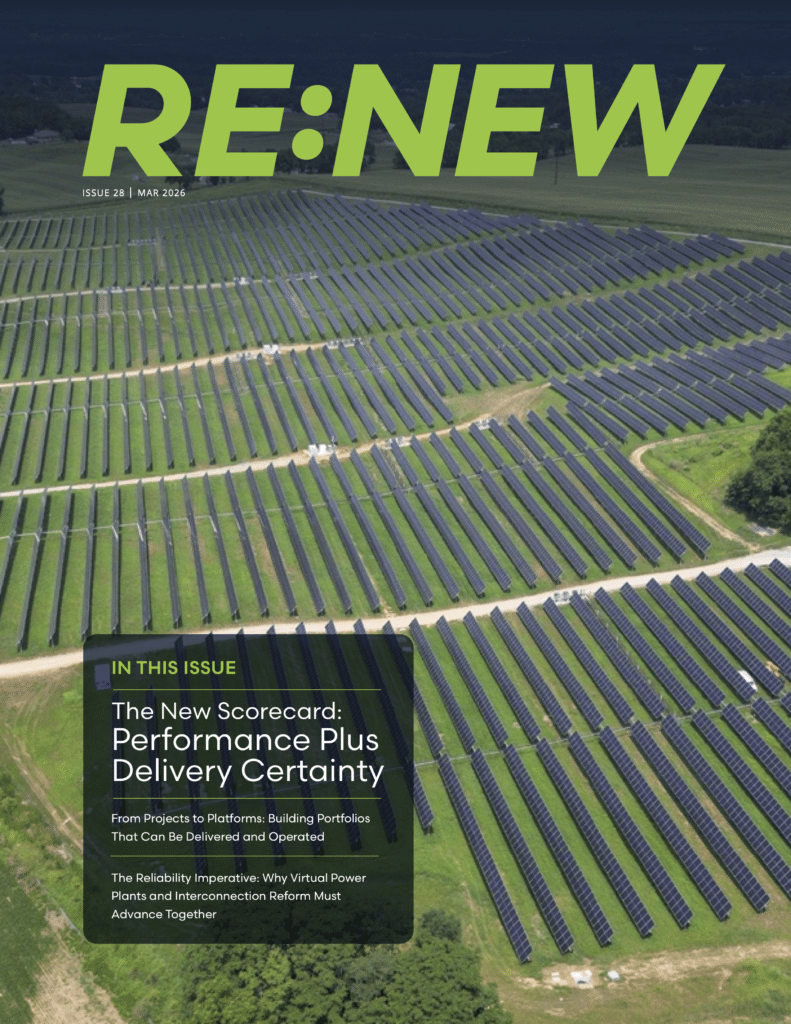
For more insights like this, explore Q1 2026 RE:NEW.
More Recent Blog Posts
Copicut Community Solar + Storage
September 8, 2026
Standard Solar · < 1 min read
Turning Contracted Revenue Into Long-Term Value
August 17, 2026
Jay Smith · 4 min read
Understanding the New Clean Energy Revenue Stack
August 5, 2026
Standard Solar · 3 min read
Standalone Storage Steps Into The Spotlight
July 21, 2026
Megan Byrn · 4 min read


Share