

As electricity demand rises from data centers, electrification and extreme weather, states need resources that can be deployed quickly, close to load and at a scale that delivers real savings and grid value.
In this Q&A with Jeff Cramer, President and CEO of the Coalition for Community Solar Access (CCSA), he discusses what the industry needs most now: faster implementation, smarter program design and broader recognition of community solar and storage as practical tools for meeting today’s affordability, reliability and capacity challenges.
What feels most urgent for the community solar industry right now?
What’s most urgent is ensuring policymakers and grid planners are enabling community-scale solar and storage solutions to meet the moment.
We’re entering a period of sustained load growth—data centers, electrification, and extreme weather are all pushing demand higher, often faster than utilities can respond. Community solar is one of the few resources that can be deployed quickly, at scale, and close to load.
The urgency means we have to ensure programs are structured to actually deliver capacity, savings, and reliability in the near term—not five or ten years out.
Where are you seeing real progress — and where are you still seeing unnecessary barriers?
We’re seeing real progress in states that are starting to treat community solar as a grid resource, not just a policy experiment. Programs are getting larger, more flexible, and more aligned with system needs.
At the same time, many of the barriers are still self-imposed. Interconnection delays, arbitrary program caps, and overly complex credit structures continue to slow down projects that are otherwise ready to go.
Which states are showing others what a well-designed community solar program can look like?
The leading states share a few traits: scale, stability, and clarity.
New York and Illinois have shown what happens when you create durable programs with enough capacity to attract sustained investment. Maine demonstrated how quickly deployment can happen when barriers are removed, even if that pace created new lessons around program management.
What’s emerging now is the next generation—states beginning to integrate storage, align incentives with peak demand, and think more intentionally about how distributed resources support the grid.
Are there states you believe could become important community solar stories in 2026?
Yes—and many of them are states where the underlying need is becoming harder to ignore.
States like Pennsylvania, Ohio, and Michigan are facing real questions around affordability, reliability, and supply. They don’t yet have fully realized community solar programs, but they’re increasingly part of broader energy conversations.
When those pressures converge—rising demand, constrained supply, and political interest in solutions—community solar tends to move quickly from a “nice to have” to something much more central.
What should lawmakers keep in mind if they want to create programs that actually deliver savings and access?
Programs work when they 1) provide clear, financeable compensation, 2) avoid unnecessary caps or bottlenecks, 3) allow developers to build efficiently and predictably.
What does the industry need most right now: better policy, faster implementation, stronger consumer education — or all of the above?
All of the above—but if you had to prioritize, it’s faster implementation.
The policy case for community solar is largely established. The economic and system benefits are well documented. The gap now is between what’s been authorized and what’s actually getting built.
Every year of delay matters more in this environment. Getting projects interconnected and operational quickly is where the focus needs to be.
If you could correct one misconception about community solar, what would it be?
That it’s a niche or marginal resource.
Community solar is often discussed as if it’s small or supplementary, but the data tells a different story. The U.S. market is already approaching 10 GW of cumulative capacity, with continued growth tied directly to state policy expansion. And if you include a broader definition that includes community-scale solar and storage solutions, we’re talking about a potential need for over 100 gigawatts in the next 5 years alone according to a recent SEPA study.
More importantly, it delivers value in ways that centralized resources often can’t—speed to deployment, proximity to load, and the ability to serve customers who otherwise wouldn’t have access.
What would success for the sector look like a year from now?
Success would look like momentum translating into deployment.
That means new state programs moving from legislation to construction, existing programs expanding in a way that keeps projects financeable, more projects actually coming online and delivering savings to customers.
It also means beginning to strategically tackle this once-in-a-generation load growth moment by broadening our advocacy for our members to open up multiple avenues to build out front-of-the-meter distributed solar and storage across the grid in several states.
Find out more: The 2026 Community and Distributed Energy Summit, May 28 – 29 in Washington, DC, is where the leaders shaping this market come together to focus on what’s next for equitable, consumer-driven solar. Join peers, policymakers, and industry experts to exchange insights on policy, program design, and innovation—and continue the conversation Jeff is highlighting here.
More Recent Blog Posts
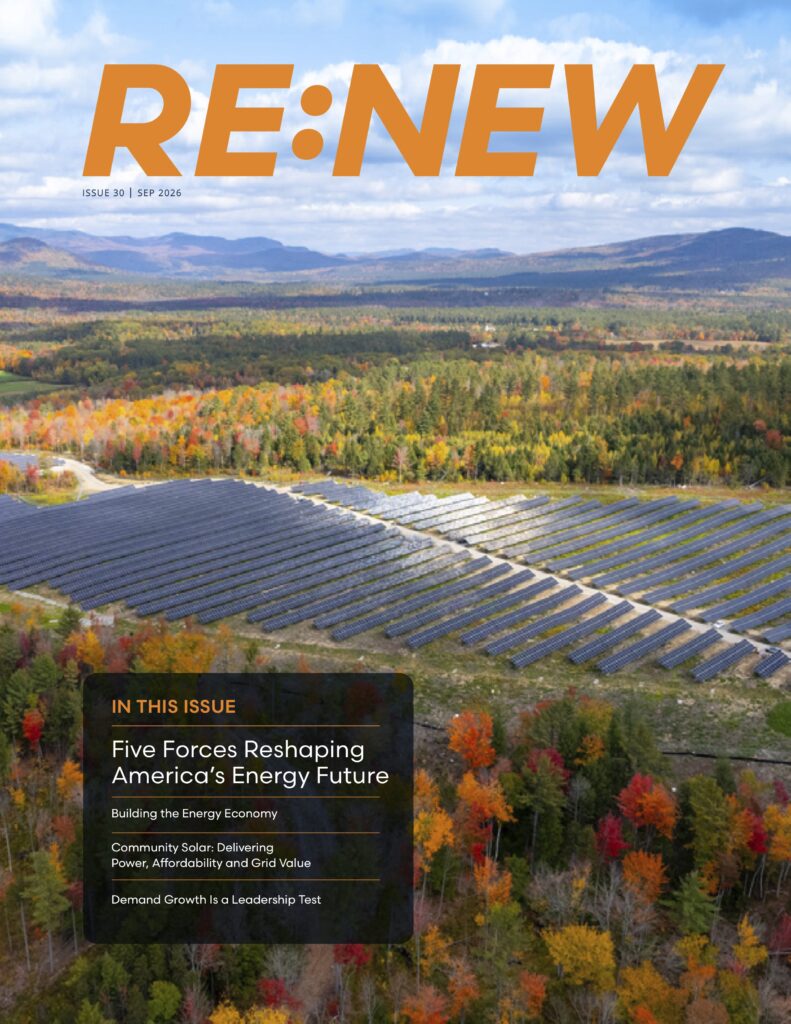
Copicut Community Solar + Storage
September 8, 2026
Standard Solar · < 1 min read
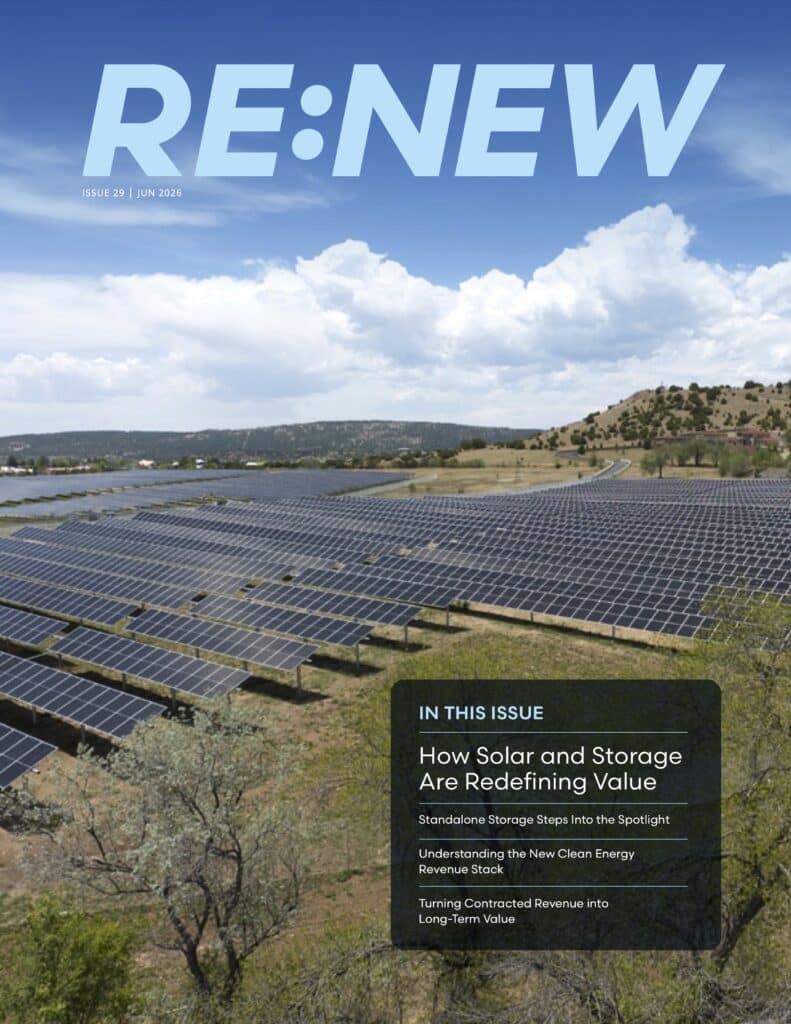
Turning Contracted Revenue Into Long-Term Value
August 17, 2026
Jay Smith · 4 min read
Understanding the New Clean Energy Revenue Stack
August 5, 2026
Standard Solar · 3 min read
Standalone Storage Steps Into The Spotlight
July 21, 2026
Megan Byrn · 4 min read
Share