
RFSH S Barrington Solar Project
Cook County, Illinois
The REFSH – S Barrington Solar Project in Cook County, Illinois, will provide the SERC Midwest/Eastern Power Grid with approximately 7.3 megawatts (MWdc) of renewable energy capacity annually. Supporting Illinois’ goal of achieving 40% renewable energy by 2030, this project will strengthen the state’s electricity mix while reducing carbon emissions.
Spanning 99.6 acres, the project will feature over 12,300 solar modules on a ballasted-foundation ground mounted system. It will produce approximately 10,000 megawatt hours (MWh) of renewable electricity each year, displacing up to 3,360 metric tons of CO₂ annually. This will significantly reduce reliance on fossil fuels and contribute to a cleaner environment.
The project site historically operated as a solid waste landfill until it was closed in 1985 under Illinois EPA IAC 807 regulations. While the site did not officially receive hazardous waste, landfill leachate may contain hazardous substances under CERCLA. The site has been remediated since then, and no further action is required with the IEPA.
As a Community Solar Garden, the project is designed to expand access to solar energy for Illinois residents who may not have the financial means or space to install solar panels on their own properties. By participating in community solar, residents can benefit from lower electricity costs while supporting the transition to renewable energy.
Construction is set to begin in September 2026, with operations expected to start by May 2027.
Benefits

Economic Impact
The REFSH – S Barrington Solar Project will deliver long-term economic benefits to Cook County, IL, by creating local construction jobs and by providing lower electricity rates to its residents. This project will generate substantial tax revenue to fund essential community services and infrastructure. By combining renewable energy development with sustainable land use, the project fosters economic growth and environmental stewardship, ensuring a lasting positive impact on the local community.
Clean Energy Impact
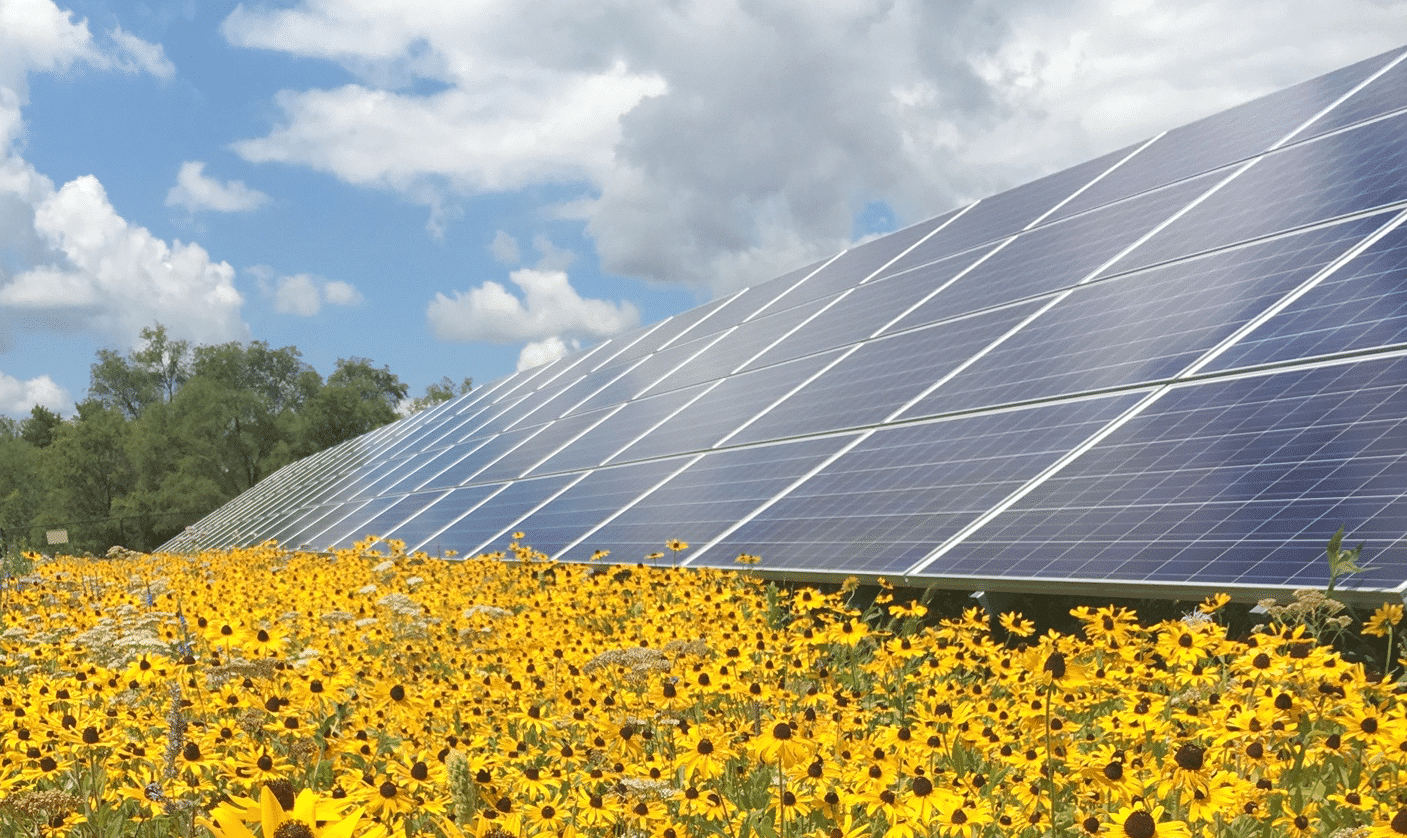
After the solid waste landfill is closed, installing a solar energy facility is to keep the land productive while ensuring that the neighboring community and ecosystems are safe. The solar array’s ballasted foundations are designed to preserve the landfill cover.
The REFSH – S Barrington Solar Project will play a vital role in Illinois’ clean energy transition by generating approximately 9,555 MWh of carbon-free electricity annually. By providing enough power for 1,300 U.S. homes annually, the project directly helps reduce greenhouse gas emissions in a state where electricity accounts for 40% of total emissions. As an emissions-free energy source, solar power supports Illinois’ decarbonization goals while enhancing the resilience and sustainability of the local grid.
Offsets
The REFSH – S Barrington Solar Project will help reduce carbon emissions by displacing approximately 3,360 tCO2e annually — equivalent to the carbon absorption of over 3,370 acres of U.S. forests. By avoiding fossil fuel combustion, the project contributes to a cleaner Illinois energy grid while supporting regional decarbonization goals. This significant emissions reduction is comparable to removing the environmental impact of burning more than 378,000 gallons of gasoline, reinforcing the project’s role in sustainability.
Location
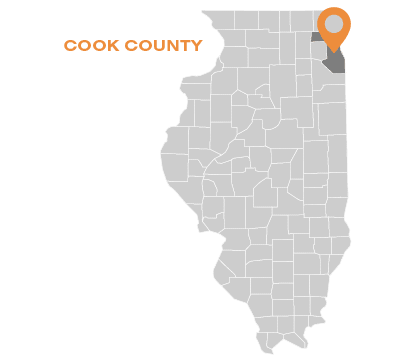
Village of South Barrington, Cook County, Illinois
Project Size
7.3 MWdc
Timeline to operation
Construction will begin in September 2026, with operations expected to commence in May 2027.
The REFSH – S Barrington Solar Project is expected to generate approximately 9,555 MWh of renewable electricity annually — enough to power about 1,300 U.S. homes — and displace up to 3,360 metric tons of CO₂ each year, equivalent to the carbon captured by more than 3,370 acres of U.S. forests.
Spanning 99.6 acres in Cook County, Illinois, this ground-mounted community solar project will include more than 12,300 solar modules and deliver approximately 7.3 MWdc of renewable energy to the SERC Midwest / Eastern Power Grid. Built on a remediated former solid waste landfill, the project will support local construction jobs, generate tax revenue and expand access to lower-cost solar energy for Illinois residents.
Location
Strategically located in South Barrington, Cook County, Illinois, the REFSH – S Barrington Solar Project repurposes 99 acres of a former solid waste landfill to generate 9,555 MWh of clean energy annually while enhancing environmental safeguards and promoting local biodiversity. Positioned within the Illinois power grid, the project will bolster regional grid reliability and contribute to the state’s goal of 40% renewable energy by 2030. The site’s design provides a long-term, safe enclosure for areas containing contaminated waste that was stored underground in the 1970s and 1980s.
Economic Impact
- Creates local construction jobs during the development phase, supporting the Cook County workforce and contributing to regional economic activity.
- Generates long-term tax revenue that can help fund essential public services, community infrastructure and other local priorities over time.
- Expands access to lower-cost renewable energy for Illinois residents through a Community Solar Garden model, helping households benefit from solar power without needing to install panels on their own properties.
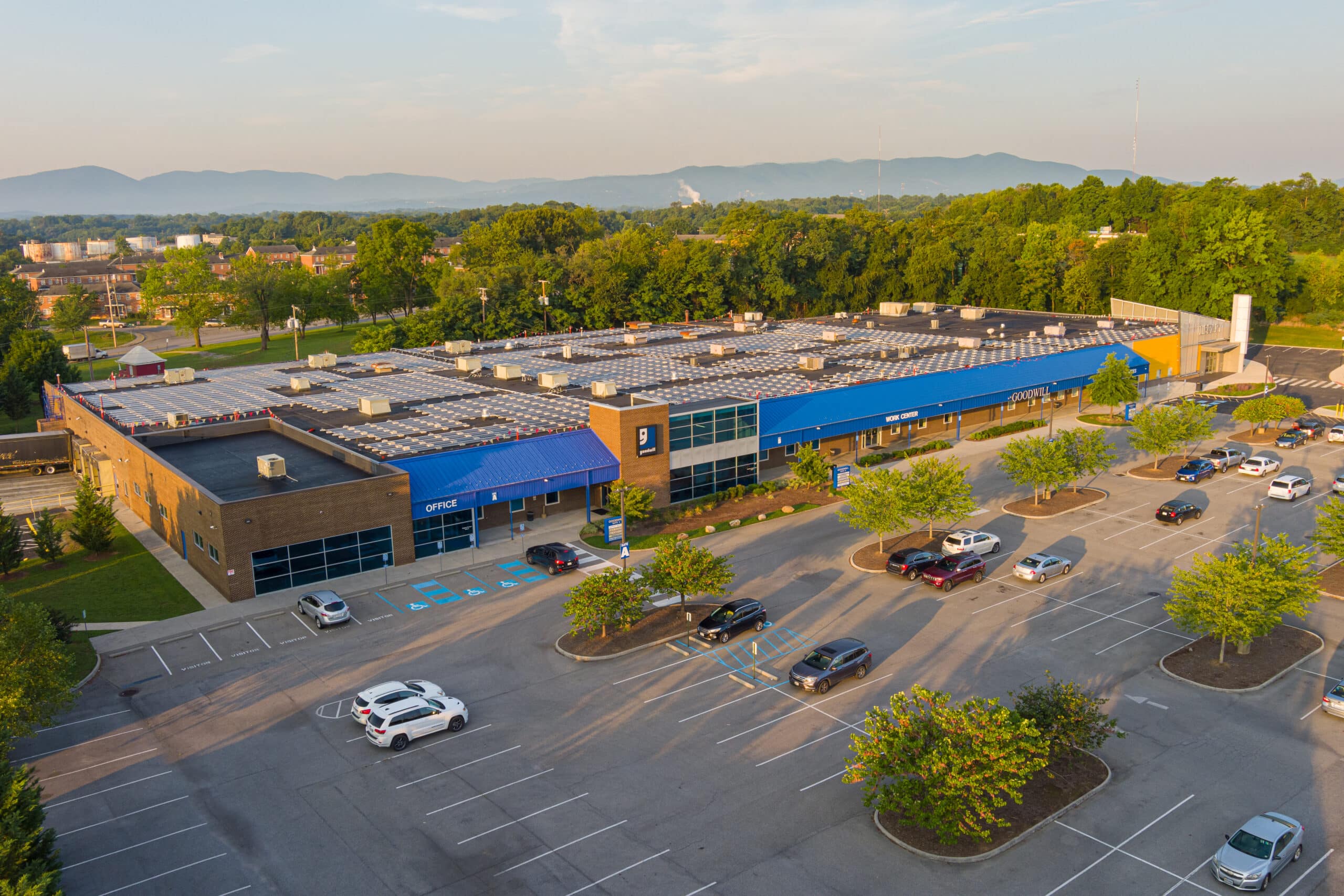
Goodwill Industries, VA, 0.5 MWdc
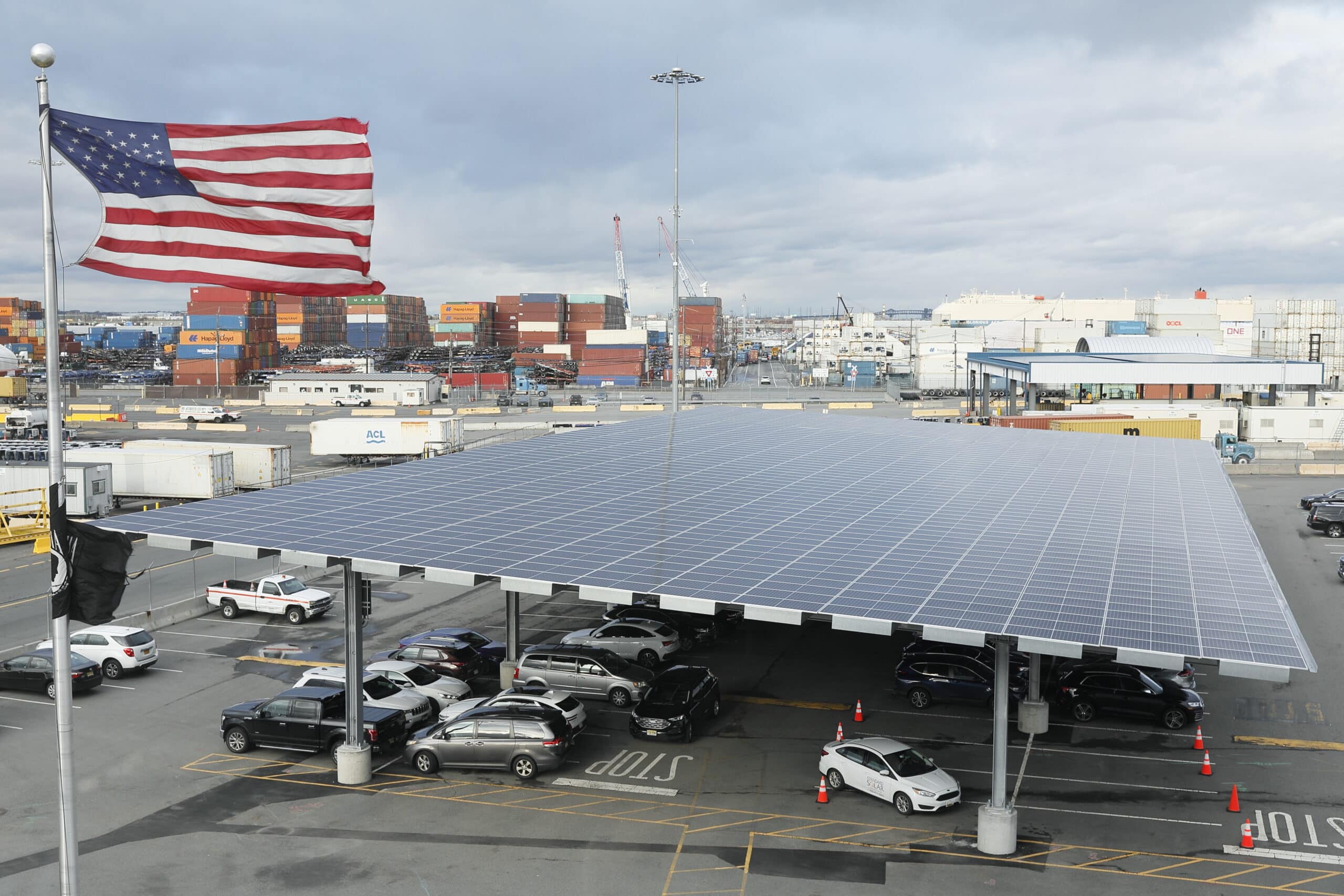
Port Newark Container Terminal, NJ, 3.29 MWdc
Clean Energy Impact
- Produces approximately 9,555 MWh of renewable electricity annually — enough to power about 1,300 U.S. homes with carbon-free energy.
- Offsets an estimated 3,360 metric tons of CO₂ each year, reducing reliance on fossil fuel generation and supporting broader emissions-reduction efforts.
- Delivers approximately 7.3 MWdc of renewable energy to the SERC Midwest / Eastern Power Grid, strengthening Illinois’ electricity mix and supporting the state’s goal of achieving 40% renewable energy by 2030.
Environmental Impact
- Repurposes a former solid waste landfill into a productive clean energy site, supporting sustainable land use while preserving safeguards for the surrounding community and ecosystems.
- Uses a ballasted-foundation ground-mounted system designed to preserve the landfill cover and avoid unnecessary disturbance to the remediated site.
- Reduces greenhouse gas emissions and avoids air pollution associated with fossil fuel generation, contributing to a cleaner environment and supporting Illinois’ long-term decarbonization goals.
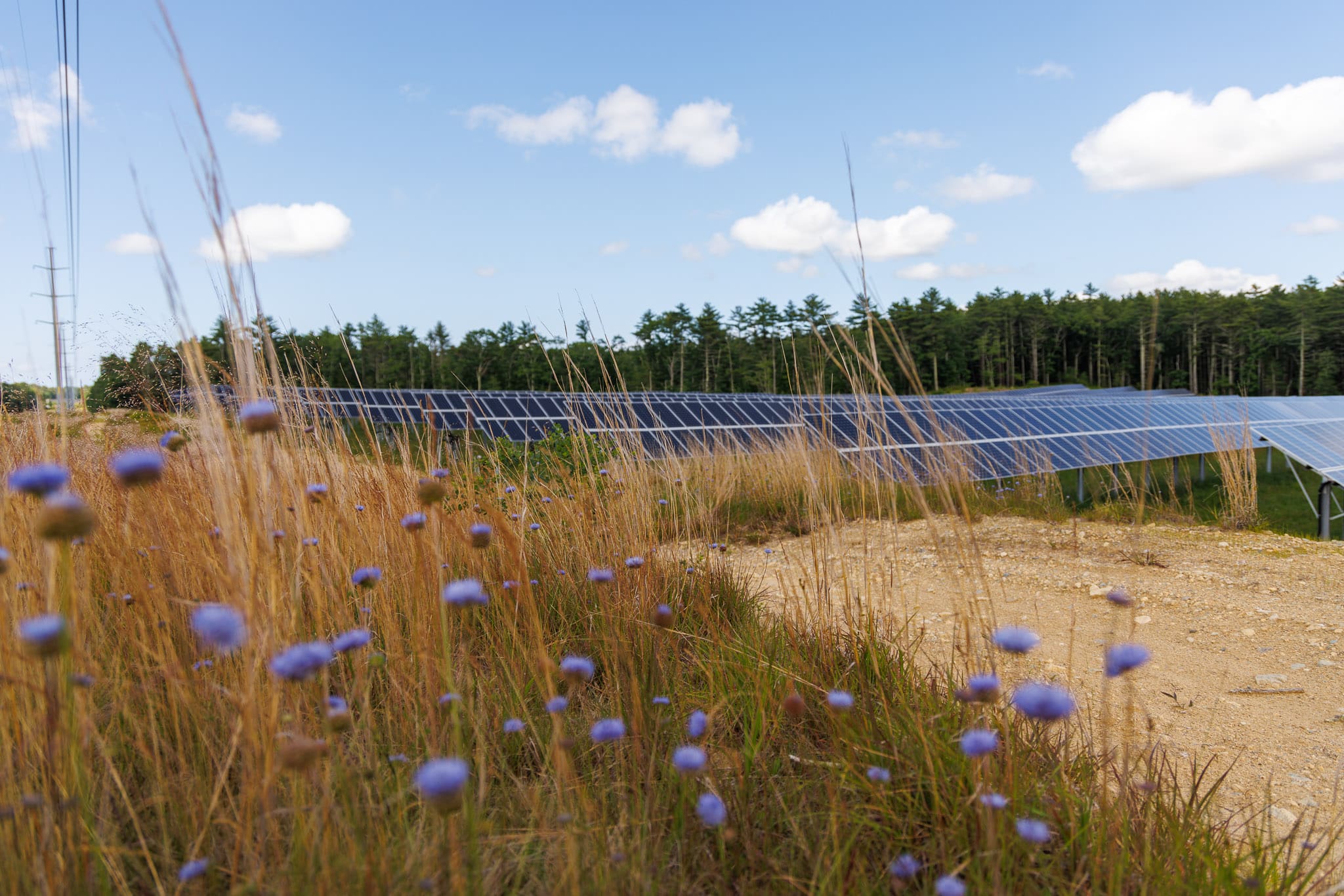
Carver, MA, 2.8 MWdc
Project Location
Where is the REFSH – S Barrington solar project located, and is it visible from public roads?
The REFSH – S Barrington solar project is in the Village of South Barrington, Cook County, Illinois.
Parts of the array may be visible from the south along E Mundhank Road. However, local neighbors are not expected to have a direct line of sight to the array.
Who owns the land on which the REFSH – S Barrington solar project is built?
The REFSH – S Barrington solar project is built on private land, which Standard Solar rents to operate the system. This land will be leased for a period of 25 years once the project is fully developed, subject to two optional and voluntary five-year renewal periods.
Safety & Operations
How do solar panels work?
Solar panels work by converting sunlight into electricity through a process called the photovoltaic effect. Each panel consists of many solar cells, typically made of silicon, a material that absorbs sunlight. When sunlight hits these cells, it excites electrons, creating an electric current. This current is collected and directed through wires to power homes, businesses or the electrical grid. Solar panels are often installed in arrays to capture as much sunlight as possible, and they work best in sunny locations. By harnessing the sun’s energy, solar panels provide a clean, renewable source of electricity without producing harmful emissions.
What happens after the useful life of a solar project?
At Standard Solar, we are committed to sustainability throughout the entire lifecycle of our projects. The REFSH – S Barrington solar project will produce electricity for 25 years. After this time, when the project reaches the end of its operational life, there are well-established processes to ensure responsible repowering or decommissioning and recycling.
Standard Solar has programs and policies to safely remove equipment, restore the land to its original state, and recycle materials like glass, metal, and silicon from solar panels. These programs allow Standard Solar to minimize waste, avoid burdening the community and support the circular economy, ensuring that renewable energy remains a sustainable solution for future generations.
Do solar projects make noise?
Solar projects are designed to operate quietly, making them an ideal option for generating renewable energy without disrupting nearby communities, agriculture or wildlife. The primary components – solar panels – make no noise during operation. Some equipment, like inverters or transformers, may produce a low humming sound when converting solar energy into electricity. The site’s equipment produces up to 79dB at a distance of 3 ft from the site. When standing at the property line, roughly 350 feet away from the equipment, the sound is barely perceptible at 35-40 dB, which is well below the average ambient noise of a suburban neighborhood. Additionally, this project is in an area where the distance from homes further reduces any potential sound impact.
Will the project produce glare?
Solar projects, including this one, are designed to minimize the potential for glare. Solar panels are specifically engineered to absorb sunlight, not reflect it, as their primary function is to convert sunlight into electricity. Modern panels are coated with anti-reflective materials to reduce reflections further. Additionally, projects undergo detailed studies and modeling during the planning phase to ensure they do not create glare that could affect nearby residents, drivers, aviation and wildlife.
Environment & Wildlife
Is REFSH – S Barrington a superfund site?
REFSH – S Barrington has not obtained a superfund designation by the EPA. However, because it is a closed municipal landfill, leachate may contain hazardous substances and therefore be regulated under CERCLA.
An EPA Superfund site is a site contaminated with hazardous substances that are managed under the Comprehensive Environmental Response, Compensation, and Liability Act (CERCLA). The program is administered by the U.S. Environmental Protection Agency (EPA). This program allows the EPA to clean up hazardous waste sites and restore them to usable land.
More information about CERCLA is available on the EPA website.
How will the project manage erosion and stormwater during its lifetime?
This project has been designed with comprehensive measures to manage erosion effectively, stormwater and dust throughout its lifetime, ensuring minimal impact on the surrounding environment and no disturbance to wetlands or waterways. The project complies with all applicable local, state and federal permits and certifications.
Before construction, the site underwent a thorough assessment, and best management practices were implemented, including silt fences, sediment basins and buffer zones, to mitigate runoff during construction.
Once operational, the site will be stabilized with vegetation, including tall fescue grasses, conservation shade mixes (grasses), and a butterfly and hummingbird garden mix (native flowers). Regular monitoring and maintenance will ensure that erosion, stormwater and dust control remain effective throughout the project.
What is the impact on area wildlife?
Standard Solar carefully considers the impact on wildlife and biodiversity in all projects to minimize disruption to local ecosystems. Detailed environmental studies are conducted to identify sensitive habitats and species, and to mitigate potential adverse impacts.
Consultation with the Illinois Department of Natural Resources (IDNR) and the U.S. Fish and Wildlife Service (USFWS)
Based on consultation with relevant agencies and available biodiversity databases, there is potential for the following endangered species to occur within the site or its vicinity.
- Northern Long-eared Bat (Myotis septentrionalis)
- Black-crowned Night Heron (Rallus elegans)
- King Rail (Rallus elegans)
- Northern Harrier (Circus cyaneus)
- Osprey (Pandion haliaetus)
- Short-eared Owl (Asio flammeus)
- Yellow-headed blackbird (Xanthocephalus xanthocephalus)
- Rufa Red Know (Calidris cautus rufa)
- Whooping crane (Grus americana)
- Eastern Messasauga (Sistrurus catenatus)
- Hine’s Emerald Dragonfly (Stomatochlora hineana)
- Monarch Butterfly (Danaus plexipus)
There are no critical habitats for the species mentioned on the property site.
Environmental Remediation: Creating a Wildlife-Friendly Site
The REFSH – S Barrington Solar Project comes online at a site that was previously cleaned up from hazardous industrial waste. Now a field, the project incorporates several measures to enhance biodiversity and create a wildlife-friendly environment for diurnal and nocturnal pollinators.
Bat boxes will be installed along the perimeter to support local bat populations. The area will be seeded with native plants and grasses that provide food and shelter for bees, beetles, butterflies and birds, as well as providing stronger nature-based controls to prevent erosion.
Wildlife-friendly fencing and vegetation buffers will be implemented to ensure the safe movement of small animals and birds throughout the site. Additionally, ongoing monitoring will be conducted to minimize environmental impact and ensure compliance with biodiversity and ecosystem protection regulations.