
OER WA Palouse Junction
City of Connell, Franklin County, Washington
The OER WA – Palouse Junction solar project is located in Franklin County, Washington. This is Standard Solar’s first project in Washington State and is set to provide approximately 12.14 megawatts (MWdc) of renewable energy annually to the Franklin Public Utility District. This project will contribute to the State’s energy strategy goal of doubling its renewable energy output by 2050, relative to 2020.
Spanning 50 acres, more than 20,000 modules of this ground-mounted solar array are expected to produce approximately 22,000 megawatt-hours (MWh) of renewable energy annually, meeting the growing demand for sustainable electricity in the region and strengthening the reliability of the FPUD electricity mix. This will displace up to 7,850 metric tons of CO2 each year.
The project will contribute to the local economy by creating construction jobs and generating long-term economic value through increased tax revenue, community investments and solar grazing. Construction will begin in March 2026, with operations expected to start by January 2027, marking an important step toward a cleaner and more sustainable energy future for all people in Illinois.
Energy generation in agricultural land: Agrivoltaics and solar grazing.
Agrivoltaics, or dual-use solar, refers to projects that utilize land for both agriculture and solar photovoltaic electricity generation. Solar grazing involves livestock (sheep) grazing around the solar panels to maintain appropriate vegetation conditions. These practices are gaining popularity nationwide.
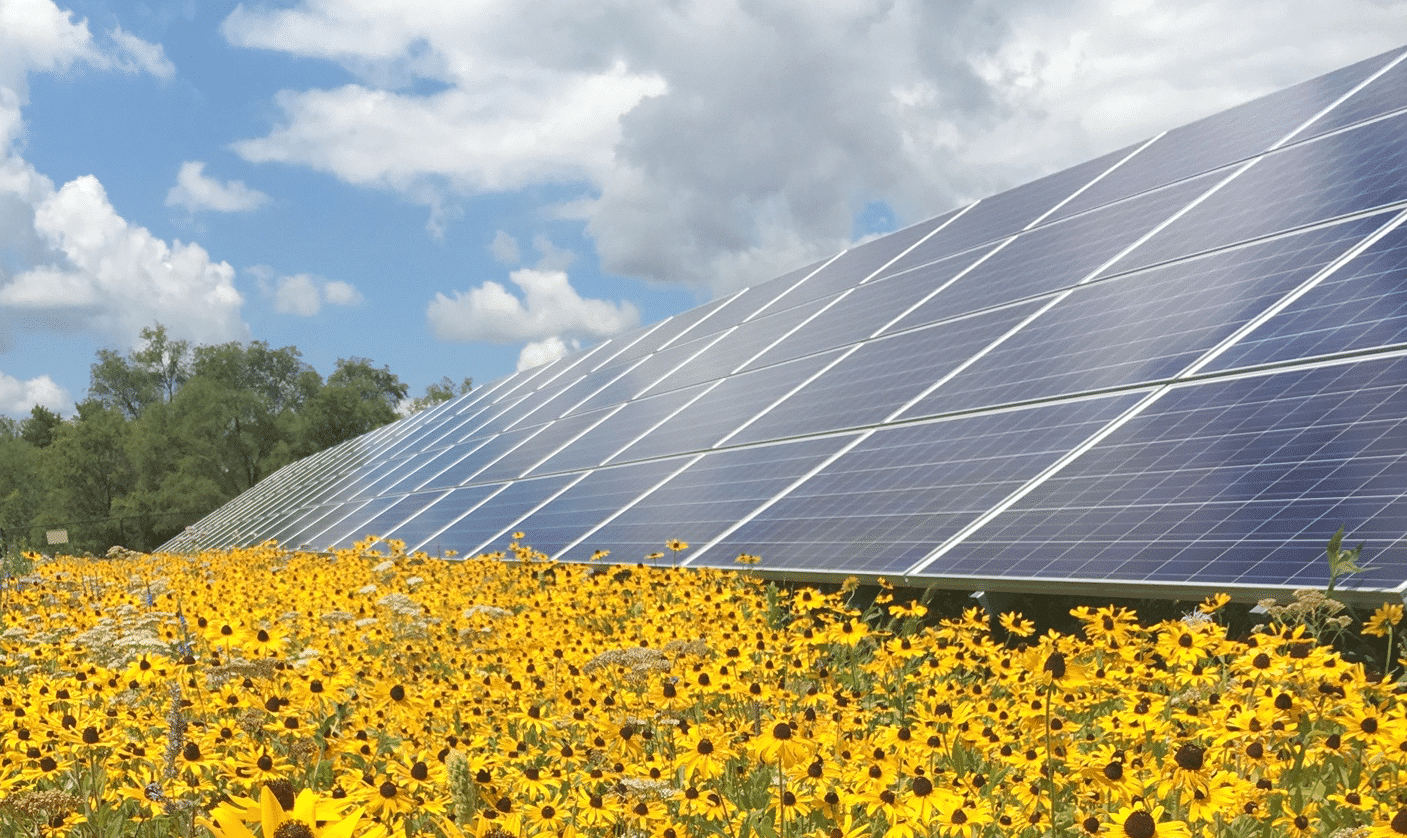
Vegetated grounds contribute to stable foundations by preventing erosion and increasing soil permeability. Planting native and pollinator-friendly plants supports biodiversity by improving soil health and providing food for local species, including bats, birds and insects.
The system has been designed with sufficient space to plant pollinator gardens. To plant the site, a seed mix containing more native flower and plant species will be used. This vegetation strategy will allow different plants to bloom throughout spring, summer and fall, providing food for pollinators from April to November.
However, tall plants can shade the modules or other important hardware, increasing fire risks during the summer. Vegetation must be managed through the project’s lifetime to ensure it remains safe to operate.
The project will use sheep to graze the area. Standard Solar and the American Grazing Association will support the creation of long-term contracts with local farmers to bring their sheep to graze the site. The solar panels are installed at a height and spacing that ensures the sheep walk around the site comfortably and safely.
When sheep graze, they leave the root structure intact while directly fertilizing the ground, allowing the plant to grow back and continue its lifecycle.
Benefits

Economic Impact
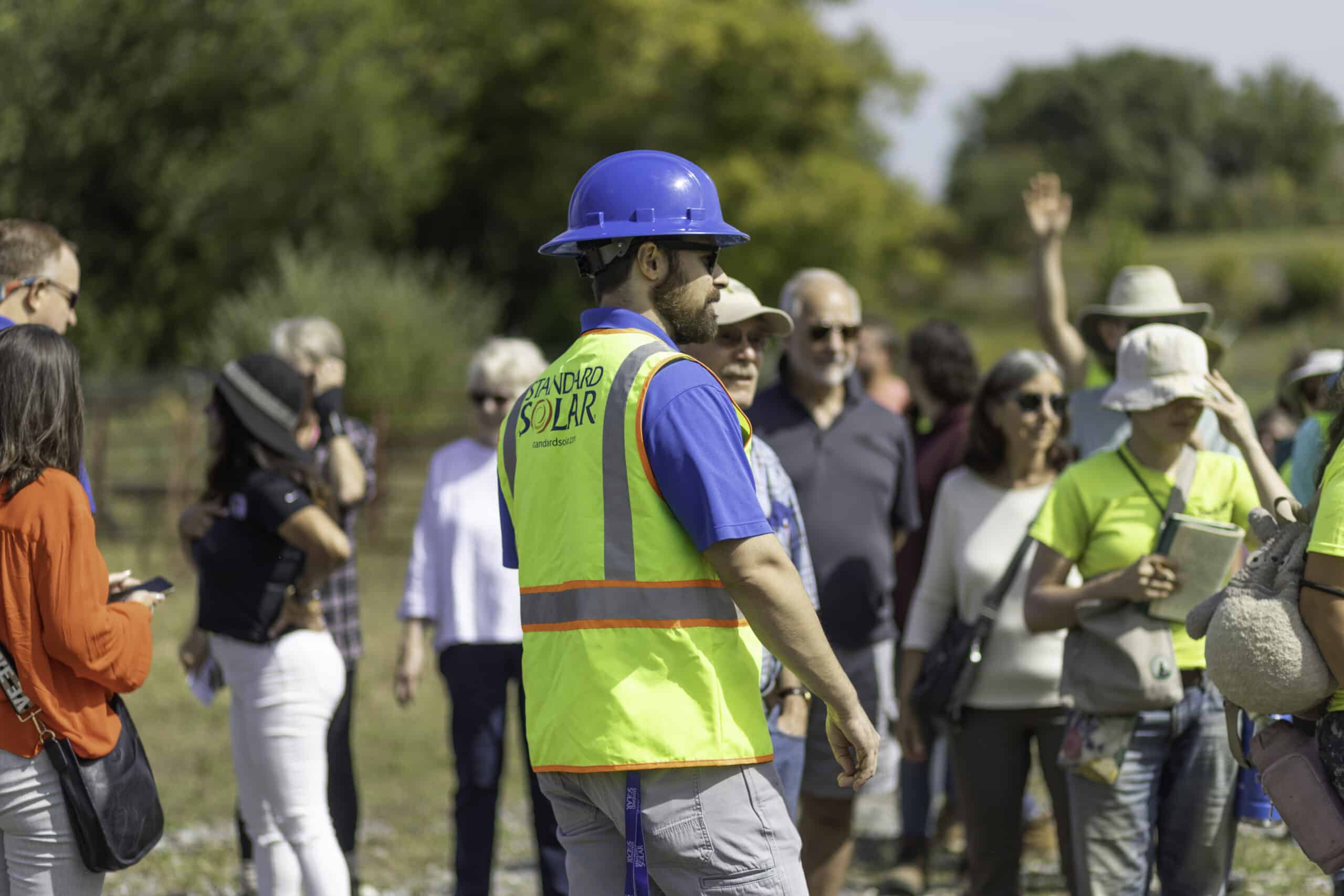
The project will create local construction jobs during its building phase, supporting the regional workforce. During its operations phase, the project will contract with local farmers to graze sheep in the area. Beyond its immediate job creation and rent payments, the project will generate substantial long-term economic value by contributing to the local tax base and helping fund essential community services and infrastructure. By fostering economic growth and investing in renewable energy, the OER WA – Palouse Junction solar project demonstrates a commitment to both environmental sustainability and the community’s financial well-being, making it a valuable asset for Franklin County’s future.
Clean Energy Impact
Solar panels do not emit greenhouse gases into the atmosphere, and they do not pollute the surrounding environment.
By producing approximately 22,000 megawatt hours (MWh) of sustainable electricity annually, it will provide a reliable source of carbon-free power to the Washington grid. Using the EPA equivalencies calculator, this project would produce enough electricity to power 3,150 U.S. homes annually.
Offsets
Location
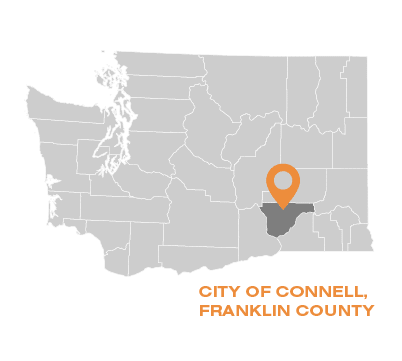
City of Connell, Franklin County, Washington
Project Size
12.14 MWdc
Timeline to operation
Construction began in March 2026, with operations scheduled to commence in January 2027.
The OER WA – Palouse Junction solar project is expected to generate approximately 22,000 MWh of renewable electricity annually — enough to power about 3,150 U.S. homes — and displace up to 7,850 metric tons of CO₂ each year, equivalent to the carbon captured by more than 15,163 acres of U.S. forests.
Spanning 50 acres in Franklin County, Washington, this ground-mounted solar array includes more than 20,000 modules and will deliver 12.14 MWdc of renewable energy to the Franklin Public Utility District. The project will also support construction jobs, local tax revenue, community investment and solar grazing with local farmers.
Location
Located in Franklin County, Washington, the OER WA – Palouse Junction solar project spans 50 acres and delivers 12.14 MWdc of renewable energy to the Franklin Public Utility District. Standard Solar’s first project in Washington supports grid reliability and advances the state’s goal of doubling renewable energy output by 2050.
Economic Impact
- Creates local construction jobs during the development phase, supporting the Franklin County workforce and contributing to regional economic activity.
- Generates long-term tax revenue that can help fund essential public services, community infrastructure and other local priorities over time.
- Supports local farmers through solar grazing partnerships and land-use opportunities, creating additional income streams while maintaining productive management of the site.
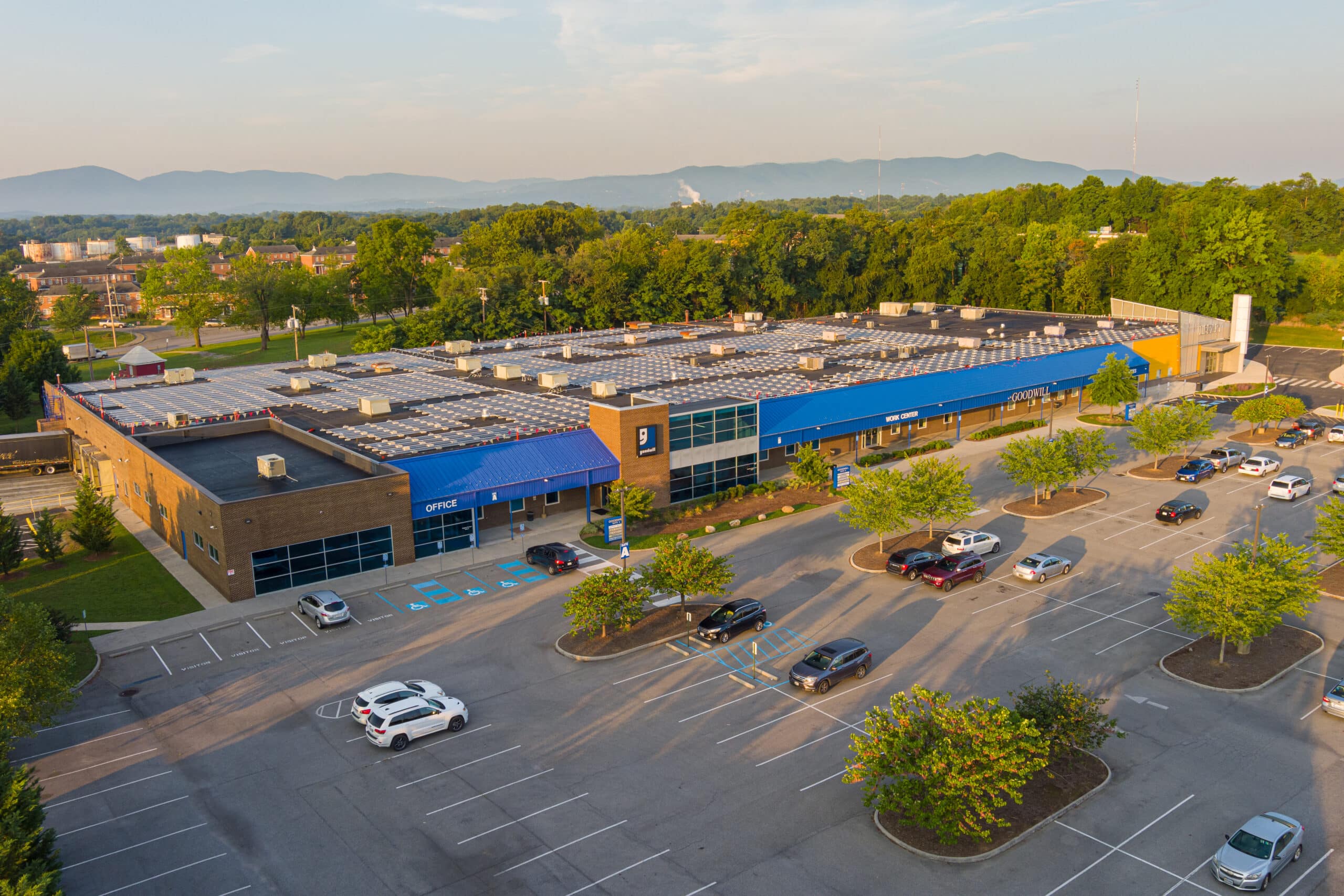
Goodwill Industries, VA, 0.5 MWdc
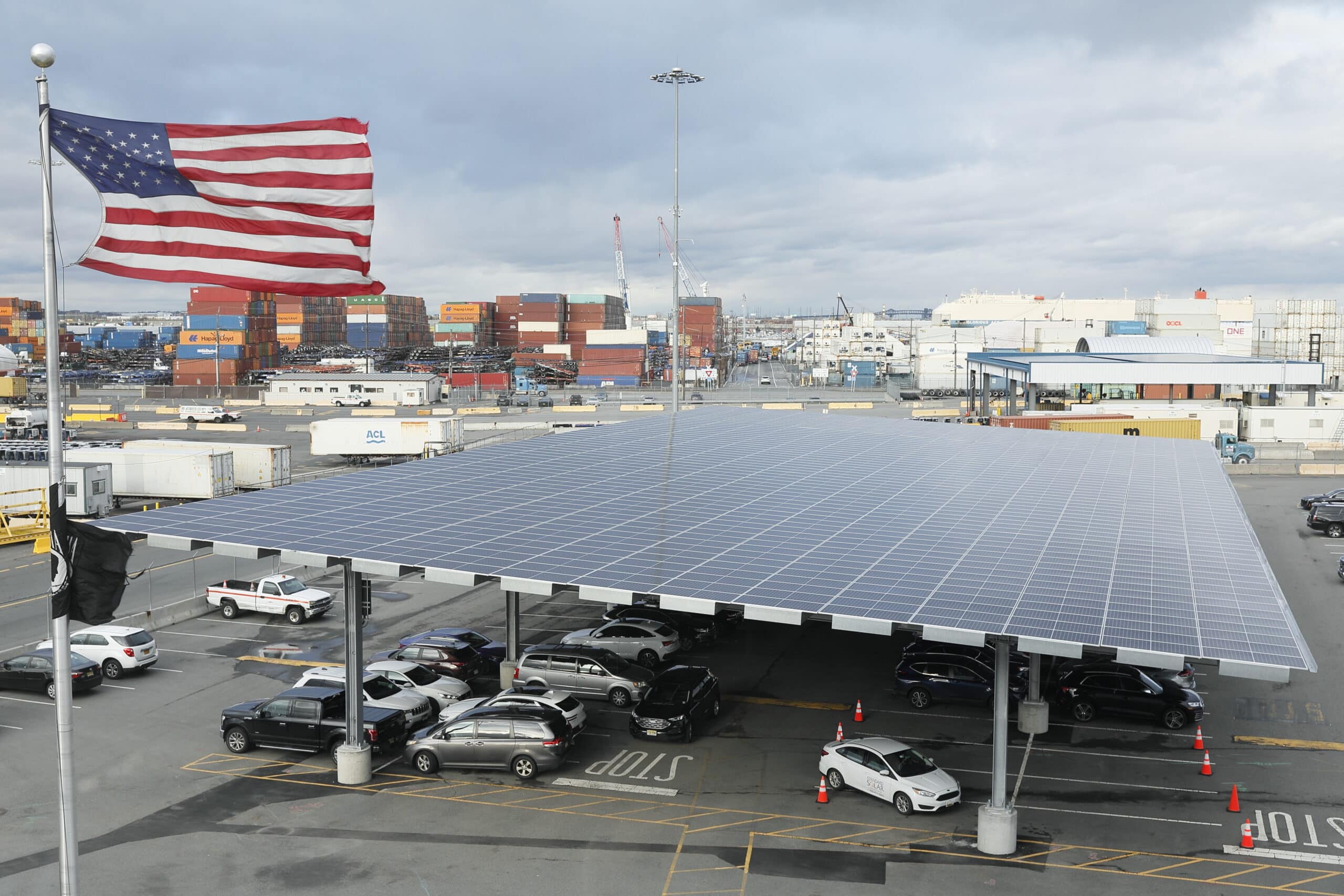
Port Newark Container Terminal, NJ, 3.29 MWdc
Clean Energy Impact
- Produces approximately 22,000 MWh of renewable electricity annually — enough to power about 3,150 U.S. homes with carbon-free energy.
- Offsets an estimated 7,850 metric tons of CO₂ each year, reducing dependence on fossil fuels and supporting broader emissions-reduction efforts.
- Supports Washington’s clean energy transition and strengthens the reliability of the Franklin Public Utility District’s power mix.
Environmental Impact
- Reduces greenhouse gas emissions and avoids air pollution associated with fossil fuel generation, supporting a cleaner environment for local communities.
- Incorporates agrivoltaics and solar grazing practices that help manage vegetation, maintain soil health and support long-term sustainable land use.
- Encourages biodiversity through native and pollinator-friendly plantings designed to provide seasonal habitat and food sources for insects, birds and other wildlife.
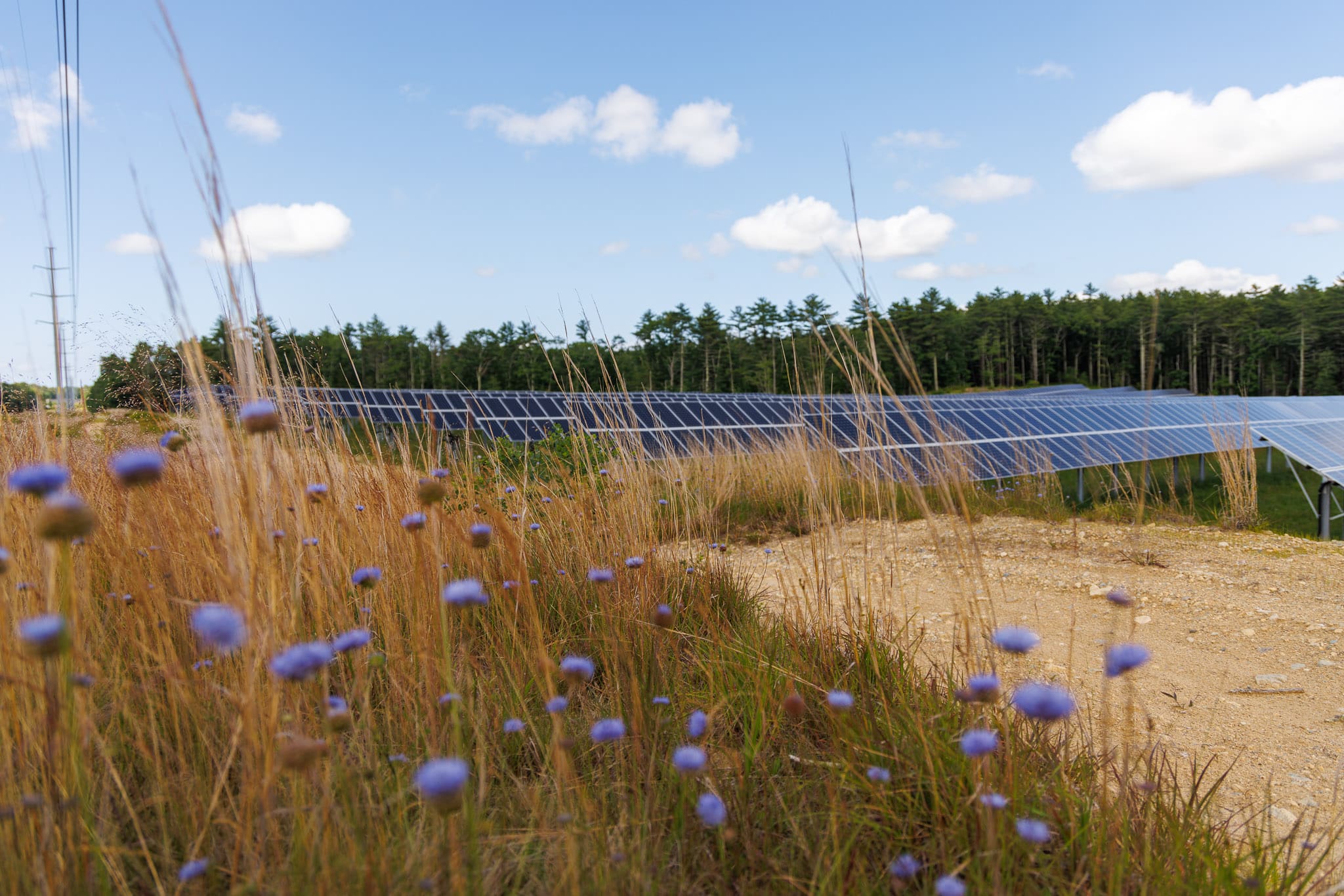
Carver, MA, 2.8 MWdc
Project Location
Where is the OER WA - Palouse Junction solar project located, and is it visible from public roads?
The OER WA – Palouse Junction solar project is in the City of Connell, Franklin County, Washington.
Portions of the project may be visible from public roadways, but it will not be visible from nearby residential areas.
Who owns the land on which the OER WA - Palouse Junction solar project is built?
The OER WA – Palouse Junction solar project is built on private land, which Standard Solar rents to operate the system. This land will be leased for a period of 30 years, spanning the development, use, maintenance and decommissioning of the project.
Safety & Operations
How do solar panels work?
Solar panels work by converting sunlight into electricity through a process called the photovoltaic effect. Each panel is made up of many solar cells, typically composed of silicon, a material that can absorb sunlight. When sunlight hits these cells, it excites electrons, creating an electric current. This current is collected and directed through wires to power homes, businesses or the electrical grid. Solar panels are often installed in arrays to capture as much sunlight as possible, and they work best in sunny locations. By harnessing the sun’s energy, solar panels provide a clean, renewable source of electricity without producing harmful emissions.
What happens after the useful life of a solar project?
At Standard Solar, we are committed to sustainability throughout the entire lifecycle of our projects. The OER WA – Palouse Junction solar project will produce electricity for 30 years. After this time, when the project reaches the end of its operational life, there are well-established processes to ensure responsible repowering or decommissioning and recycling.
Standard Solar has programs and policies in place to safely remove equipment, restore the land to its original state and recycle materials such as glass, metal and silicon from solar panels. Such programs allow Standard Solar to minimize waste, avoid burdens on the community and support the efficient use of resources, ensuring that renewable energy remains a sustainable solution for generations to come.
Do utility-scale solar projects make noise?
Solar projects are designed to operate quietly, making them an ideal option for generating renewable energy without disrupting nearby communities, agriculture, or wildlife. The primary components – solar panels – make no noise during operation. Some equipment, such as inverters or transformers, may produce a low humming sound (up to 60 dB) when converting solar energy into electricity. Still, this noise is minimal and typically noticeable only when close to the equipment (within 10 feet). Overall, solar projects are a clean, quiet and community-friendly energy solution.
Since solar panels can only generate electricity during the daytime, the system is silent at night.
Will the project produce glare?
The design of solar projects, including this one, minimizes the potential for glare. Solar panels are specifically engineered to absorb sunlight, not reflect it, as their primary function is to convert sunlight into electricity. Modern panels are coated with anti-reflective materials to further reduce any reflection. Additionally, projects undergo detailed studies and modeling during the planning phase to ensure they do not create glare that could affect nearby residents, drivers, aviation and wildlife.
Standard Solar has consulted with the U.S. Department of Defense and determined that this project poses no glare risks to aviation and ground activities at the airport adjacent to the project area.
Environment & Wildlife
How will the project manage erosion and stormwater during its lifetime?
This project has been designed with comprehensive measures to effectively manage erosion, stormwater and dust throughout its lifetime, ensuring minimal impact on the surrounding environment and no disturbance to wetlands or waterways. The project has all applicable local, state and federal permits and certifications.
Before construction, the site underwent a thorough assessment, and best management practices were implemented, including silt fences, sediment basins and buffer zones, to mitigate runoff during construction.
Once operational, the site will be stabilized with vegetation, including tall fescue grasses, conservation shade mixes (grasses) and a butterfly and hummingbird garden mix (native flowers). Regular monitoring and maintenance will ensure that erosion, stormwater and dust control remain effective throughout the project.
What is the impact on area wildlife?
As part of the project’s environmental review and permitting process, consultations were conducted with the U.S. Fish and Wildlife Service and the Washington Department of Fish & Wildlife to identify species that may occur within or near the project area and to assess any potential overlap with designated critical habitat.
- The U.S. Fish and Wildlife Service (USFWS) identified the Yellow-billed Cuckoo (Coccyzus americanus). Although critical habitat has been designated for this species, the project area does not overlap with that habitat.
- The Washington Department of Fish & Wildlife identified the Ferruginous Hawk (Buteo regalis) as a species that may potentially occur within and around the site.
On-site survey
Biologists surveyed the site for threatened, endangered and sensitive wildlife species, raptor nests and habitat within the project area. These on-site surveys found no threatened, endangered or sensitive wildlife species in the surveyed area, which included the project site and a 1-mile buffer. Because the site is a vacant agricultural field, it does not support nesting. All identified nests were in good condition and located outside the fenced area.
Creating a wildlife-friendly site
The site will be seeded with plants that provide food and habitat for bees, beetles, butterflies and birds should they occur on the site. Vegetation will also provide forage for sheep flocks grazing the area. Wildlife-friendly fencing and vegetation buffers will support the safe movement of small animals and birds, and the site will be monitored to minimize impacts and ensure compliance with biodiversity and ecosystem protection requirements.
Why are sheep on the site? Why not goats? Or cows?
Sheep are widely considered among the most effective livestock options for grazing at solar sites for several reasons. As they graze, sheep are fed, generate income for their owners and directly fertilize the soil. Unlike cattle, sheep are smaller and gentler, which allows them to move through the system more easily and reduces the risk of damage to equipment or injury to the animals. Unlike goats, sheep leave the root structure of plants intact, allowing vegetation to regrow, supporting the water cycle and helping hold soil in place to reduce erosion. Goats also tend to climb vertical structures, which can create risks for both the animals and the solar infrastructure.